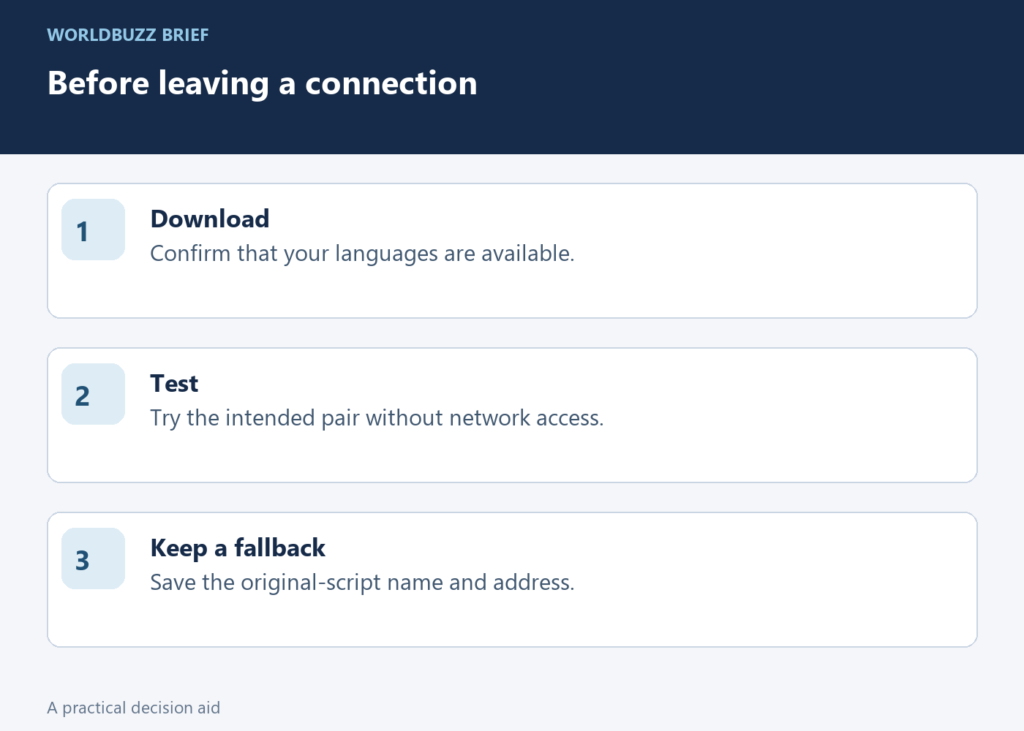
An offline language pack is most useful when you know what it can do before losing your connection. A quick pre-trip check can reveal a missing download or an unsupported mode. Once you are travelling, the more important habit is to inspect the small pieces of a translation that can reverse a practical instruction: a time, a number or a negative.
Download before leaving a reliable connection
Google Translate’s offline-language instructions explain how to download available language packs in the mobile app. Check the languages you expect to use and whether a download option is offered. Do not assume that installing the app also installs every language or that every language has the same offline support.
Finish the downloads on a reliable connection, then test your intended language pair without network access. Use a harmless sample you understand, such as a short arrival-time sentence, and verify that the result appears. This is a suggested preparation check, not a claim that we tested your phone, app version or particular language pack.
Test the mode you actually intend to use
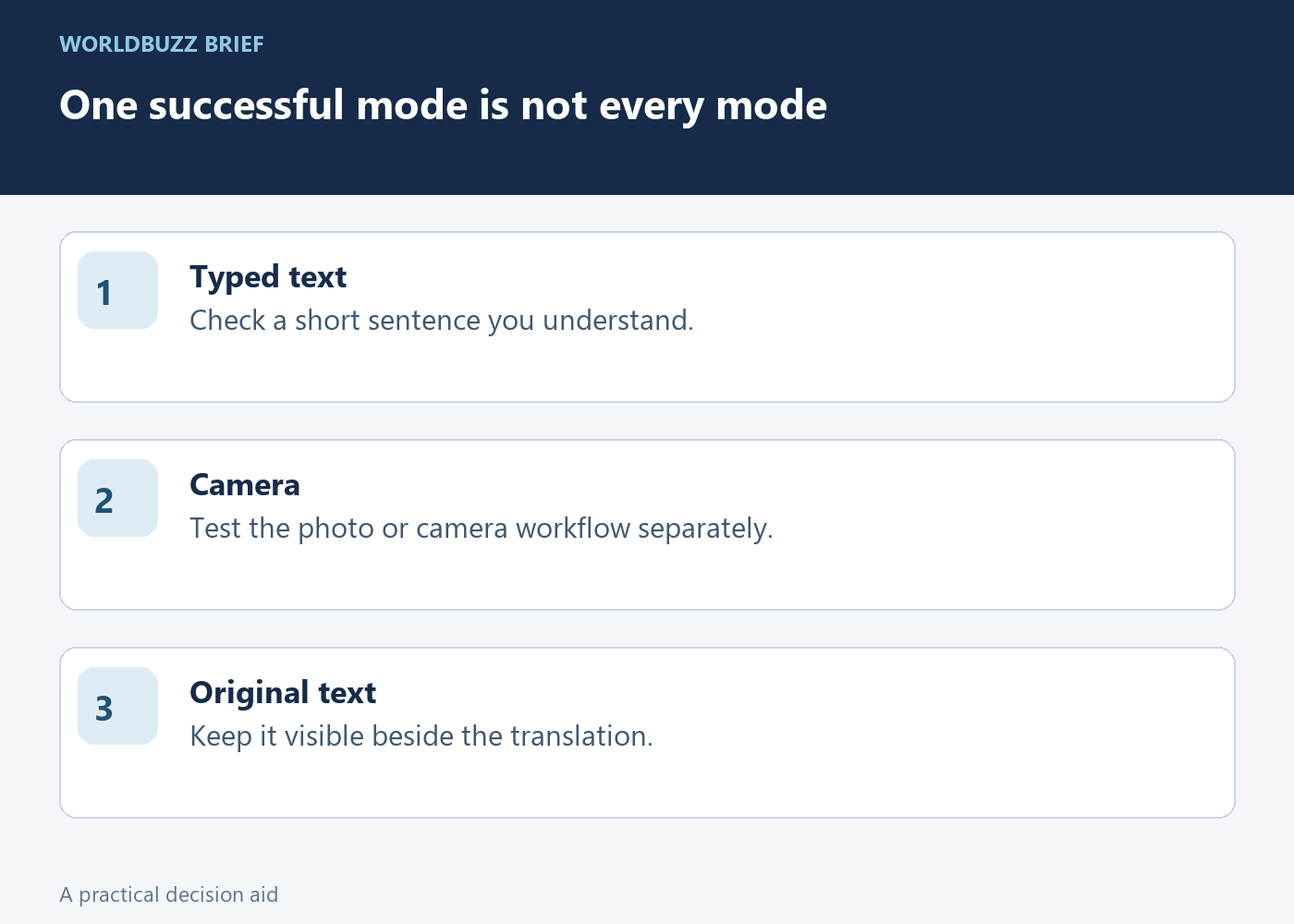
Typing a sentence and translating a photograph are different tasks. If you plan to point the camera at a menu or sign, check that workflow separately on your own device. Camera availability and results can depend on the languages, downloaded data and app support; a successful typed translation is not proof that every other mode will work offline.
Keep a fallback that does not depend on the same uncertain feature. For a hotel, save the address in its original script alongside the translated form. For a destination, keep the exact name you can show to staff. These small preparations can be more useful than a long translated paragraph when you need to communicate quickly.
Inspect the details that could reverse the instruction
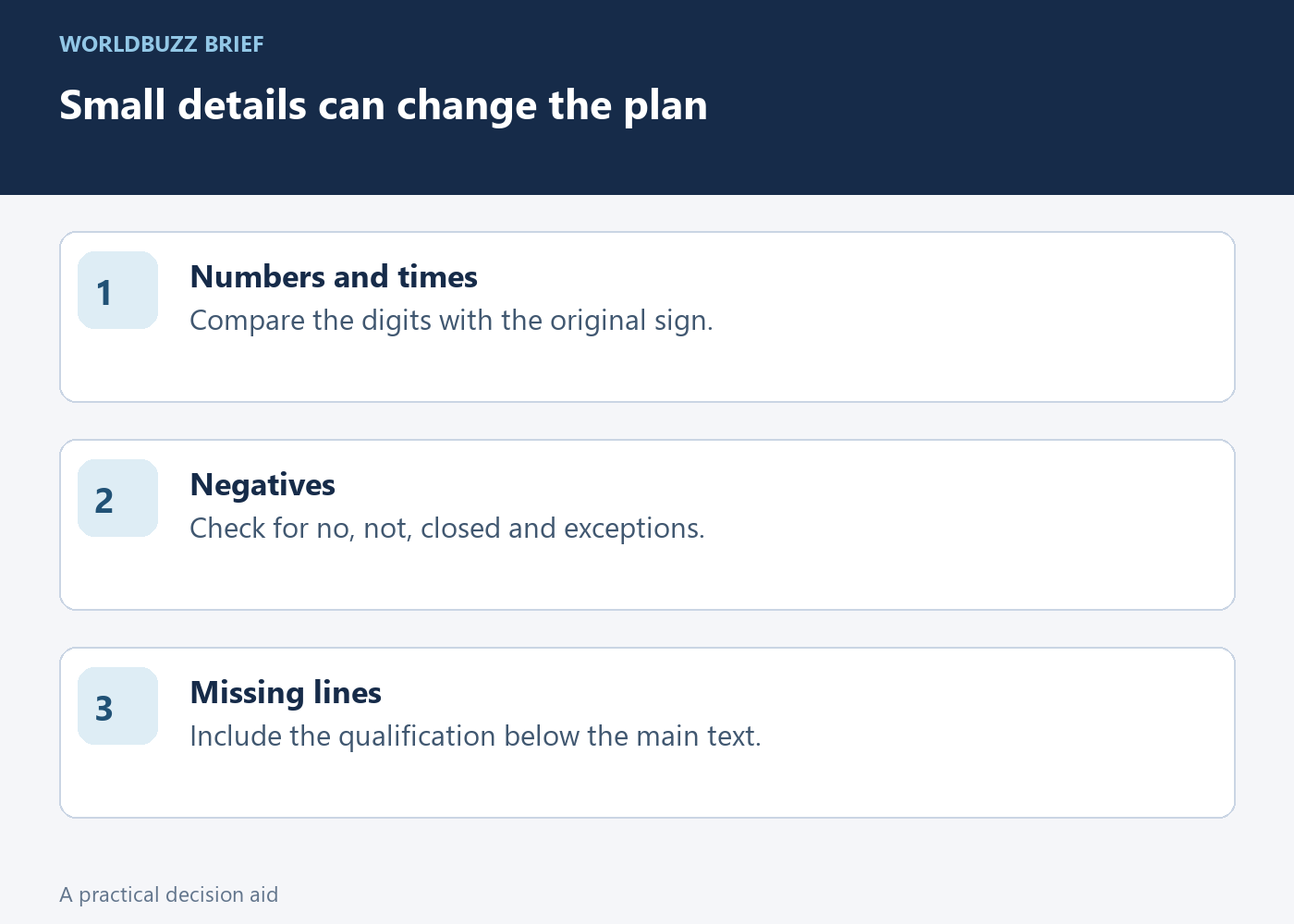
For an opening-hours sign, identify the digits, weekday names and words that indicate closure or exceptions. Compare them with the original image rather than reading only the smooth translated sentence. A missed “not,” a line break between two conditions or an exception printed in smaller text can change which day the instruction applies to.
Imagine a sign with ordinary hours on one line and a holiday exception below. Translating just the first line produces a plausible answer with the most important qualification missing. Capture the whole relevant sign, inspect whether all lines were recognized, and ask a staff member when the remaining ambiguity affects entry or travel plans.
Use the translation to ask a better question
When uncertain, reduce the question to one decision. Show the original sign and ask whether entry is possible today at your intended time, instead of presenting a complicated translated explanation. Keep the original visible so the other person can correct the meaning without trying to reverse-engineer the translation.
Offline translation is an aid to this exchange, not a replacement for confirmation when the consequence matters. For routine travel planning, saving the original address, checking the actual mode and preserving exceptions removes several common points of confusion. The preparation takes place before departure; the final interpretation still belongs to the situation you encounter.