Reclaiming Stranded Capacity
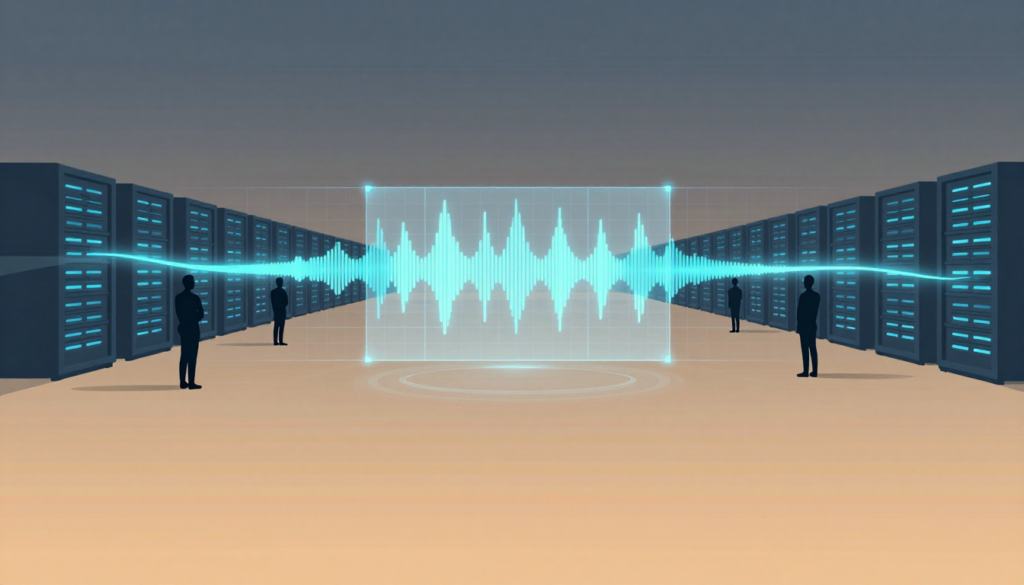
The NVIDIA DSX MaxLPS platform addresses the primary constraint of AI factory economics: power. By continuously monitoring GPU and rack-level consumption, the system dynamically reallocates available headroom across nodes based on workload type. This approach recovers capacity that static provisioning would otherwise leave stranded, converting it into real-world usage without expanding the physical footprint.
In a validation by cloud provider Lambda, this strategy demonstrated tangible gains within a fixed power budget. By running 19 nodes within the same power envelope as 16 nodes operating at full power, Lambda achieved a 24% increase in cluster-wide token throughput, rising from approximately 4 million tokens per second to 5 million. This optimization also improved performance per watt by 23%, illustrating how intelligent management can extract more compute density from existing infrastructure.
The mechanism relies on real-time adjustments rather than static allocation. DSX MaxLPS shifts available power where it is needed most, allowing the system to maintain high-priority inference workloads while yielding lower-priority jobs when necessary. This dynamic approach ensures that the facility operates closer to its theoretical maximum efficiency without requiring additional physical space or energy capacity.
Lambda's Validation Results
Cloud provider Lambda validated the capabilities of NVIDIA DSX MaxLPS in a deployment environment, providing concrete evidence that intelligent power management allows a fixed budget to support significantly more work. The validation focused on reclaiming stranded capacity by adjusting node-level power targets rather than relying on static provisioning. By running 19 nodes within the same power envelope as 16 nodes operating at full power, Lambda achieved a 24% increase in cluster-wide token throughput. This optimization shifted total output from roughly 4 million tokens per second to 5 million tokens per second while improving performance per watt by 23%. The results demonstrate that DSX MaxLPS effectively monitors GPU and rack-level consumption to reallocate headroom based on workload type, converting previously unused capacity into real-world usage without expanding the physical footprint or power infrastructure.
Automated Grid Responsiveness
Beyond static optimization, the system integrates with grid signals through NVIDIA DSX Flex and partner Emerald AI’s Conductor platform. The Conductor platform acts as a grid-orchestration tool that receives signals about grid conditions and adjusts the data center’s flexible computing workloads accordingly. In a demonstration at a Silicon Valley data center, utility demand signals triggered automated workload adjustments that reduced power consumption from four megawatts to three without interrupting critical AI services. The system executed this by yielding lowest-priority jobs while keeping high-priority inference running, requiring no operator intervention. This capability is part of the broader NVIDIA DSX suite, which includes MaxLPS for real-time power optimization and Flex for grid-signal responsiveness, addressing power as a primary constraint in AI factory economics.
Hardware and Software Synergy
The NVIDIA Vera Rubin NVL72 system represents the next-generation hardware infrastructure designed to maximize token throughput within fixed power constraints. In its first MLPerf Inference preview submission, this architecture delivered up to 3.7x higher throughput than the previous GB300 NVL72 system on Qwen3-VL workloads and up to 2.5x on DeepSeek-R1 tasks. This performance leap is supported by a scalable design that maintains high efficiency across large deployments; for instance, a 288-GPU submission spanning four GB300 NVL72 racks achieved 99% scaling efficiency, with throughput growing nearly linearly from a single-rack baseline to the multi-rack configuration.
These hardware advancements are complemented by software optimizations that address memory traffic and scheduling bottlenecks within power-constrained environments. NVIDIA’s MLPerf Inference v6.1 submissions demonstrated up to 1.6x higher performance than v6.0 through software improvements alone, with additional gains realized after the benchmark submission period. Key components in this software stack include vLLM, Dynamo, TensorRT-LLM, disaggregated serving, expert parallelism, and lower-precision KV cache techniques. Together, these elements allow the system to reclaim capacity that static provisioning would otherwise leave unused, ensuring that the increased compute density of the Vera Rubin NVL72 translates into tangible efficiency gains in AI factory operations.
Practical Implications for AI Factories
The core takeaway is that tokens per megawatt is becoming a more useful metric than raw compute density. Operators can expect up to 1.4x more tokens per megawatt through factory-wide power optimization, effectively increasing output without new hardware. As systems like DSX MaxLPS mature, the focus shifts from simply buying more GPUs to intelligently managing the existing electrical envelope.
This shift is driven by the reality that power delivery, cooling, and networking often constrain AI factory economics before compute does. NVIDIA’s September AI Infra Summit material highlights this by asking how many output tokens a fixed megawatt can produce after these overheads are paid for. DSX MaxLPS addresses this by continuously monitoring GPU and rack-level power consumption to dynamically shift available power where it is needed most. This process reclaims capacity that static provisioning would otherwise leave stranded, allowing more nodes to run within the same facility envelope.
Concrete validation from cloud provider Lambda demonstrates these practical gains. By running 19 nodes within the same power budget as 16 nodes at full power, Lambda achieved a 24% increase in cluster-wide token throughput, rising from roughly 4 million tokens per second to 5 million. This resulted in a 23% improvement in performance per watt. The system’s ability to manage workloads is further illustrated by NVIDIA partner Emerald AI’s Conductor platform, which executed automated demand-response cycles at a Silicon Valley data center. In these scenarios, the system reduced power consumption from four megawatts to three based on utility signals while keeping high-priority inference jobs running and yielding lower-priority tasks, all without operator intervention.
- From Megawatts to Tokens: How NVIDIA Maximizes AI Factory Production | NVIDIA Blog
- AI Infra Summit: NVIDIA Vera Rubin and DSX Platform Advances Showcase Energy Efficiencies of Optimiz
- From Megawatts to Tokens: How NVIDIA Maximizes AI Factory Production – TETNET Pro
- AI Data Centers Learn to Flex: 24% More Compute From Same Power Budget | VFF – The signal in the noi
- AI Factory Tokens per Watt: NVIDIA Vera Rubin DSX Bottleneck