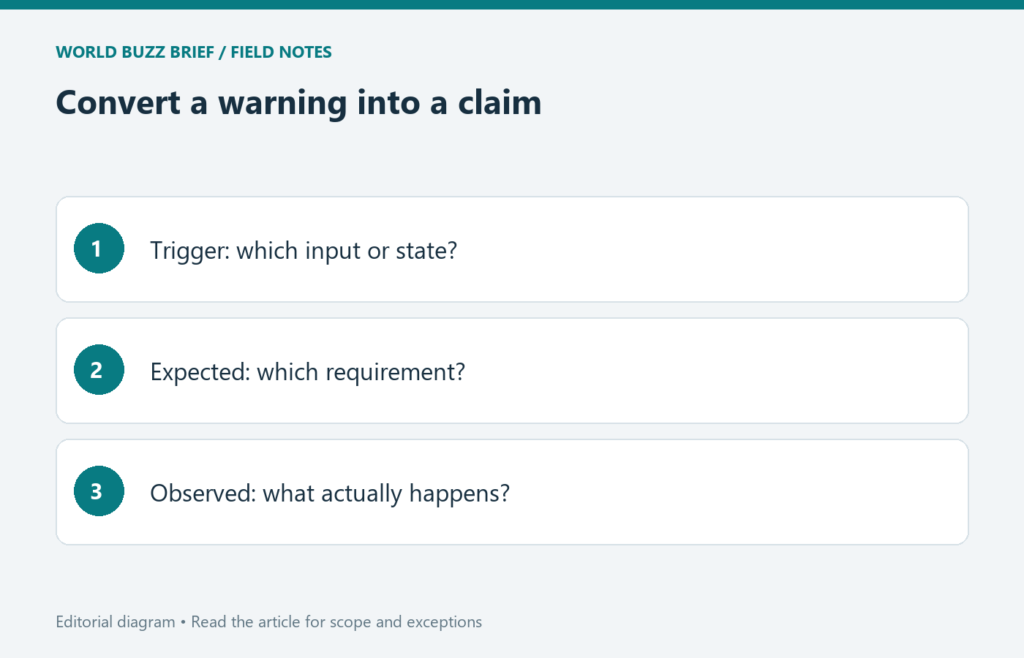
An AI reviewer can point to a possible bug quickly. The value appears when you can show what input triggers it, what result is wrong, and why the proposed fix changes that result. Treating every confident comment as a required patch creates unnecessary churn; dismissing every uncertain comment can miss a real defect. Use the same small verification process for both.
Turn the comment into a concrete claim
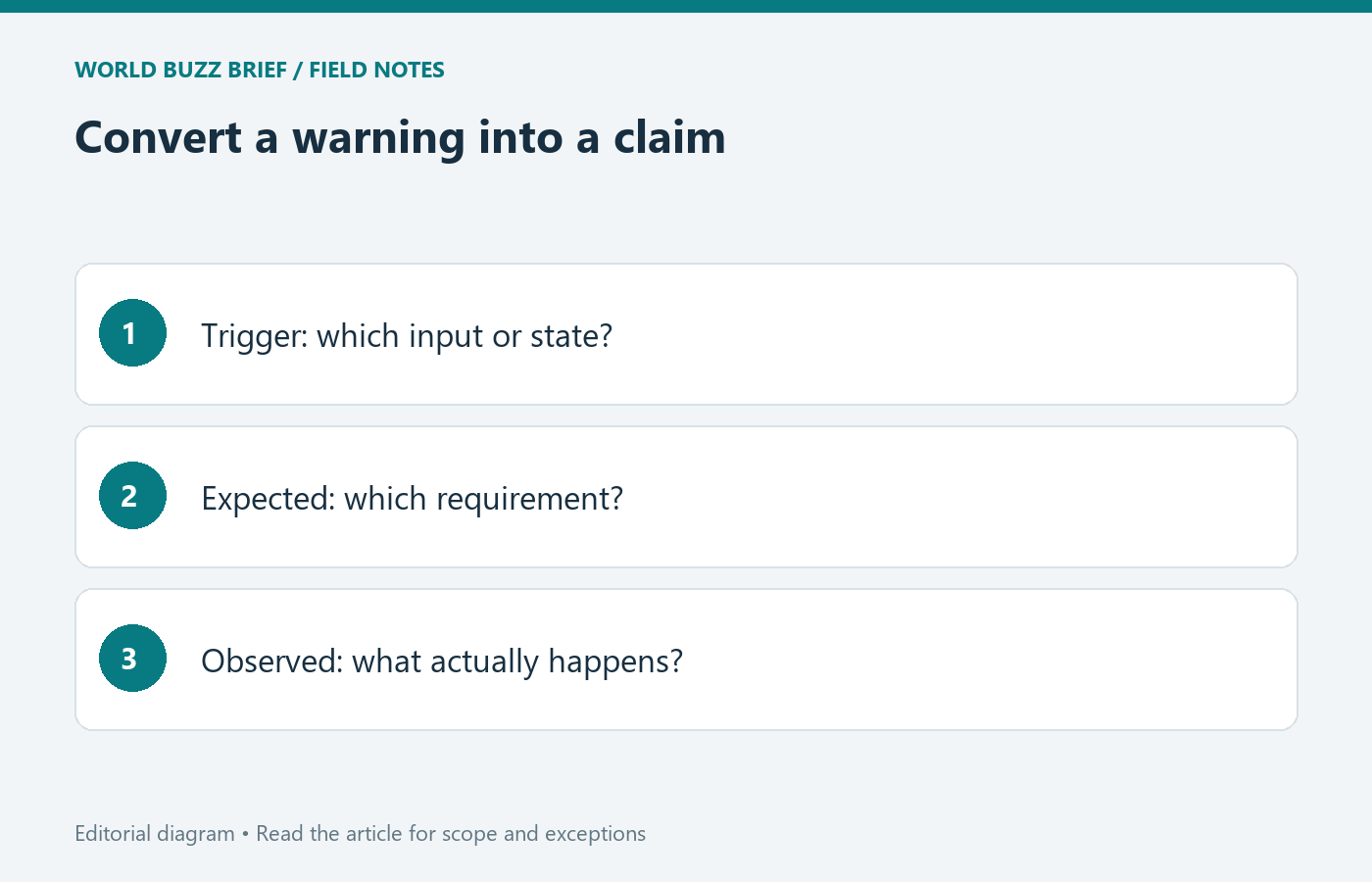
GitHub’s documentation explicitly recommends validating Copilot code-review feedback because it can miss problems or make mistakes. Begin by restating a comment as a testable claim: under a particular input or state, the code produces one outcome when the requirement calls for another. If you cannot name the requirement, the comment may be a design preference rather than a demonstrated bug.
For example, ‘this may fail on an empty list’ is a starting hypothesis. Ask what the public function promises for an empty list, trace the actual call path, and identify whether an earlier check already handles it. A warning that ignores an existing guard should not cause you to add a second, conflicting behavior.
Reproduce the smallest relevant case
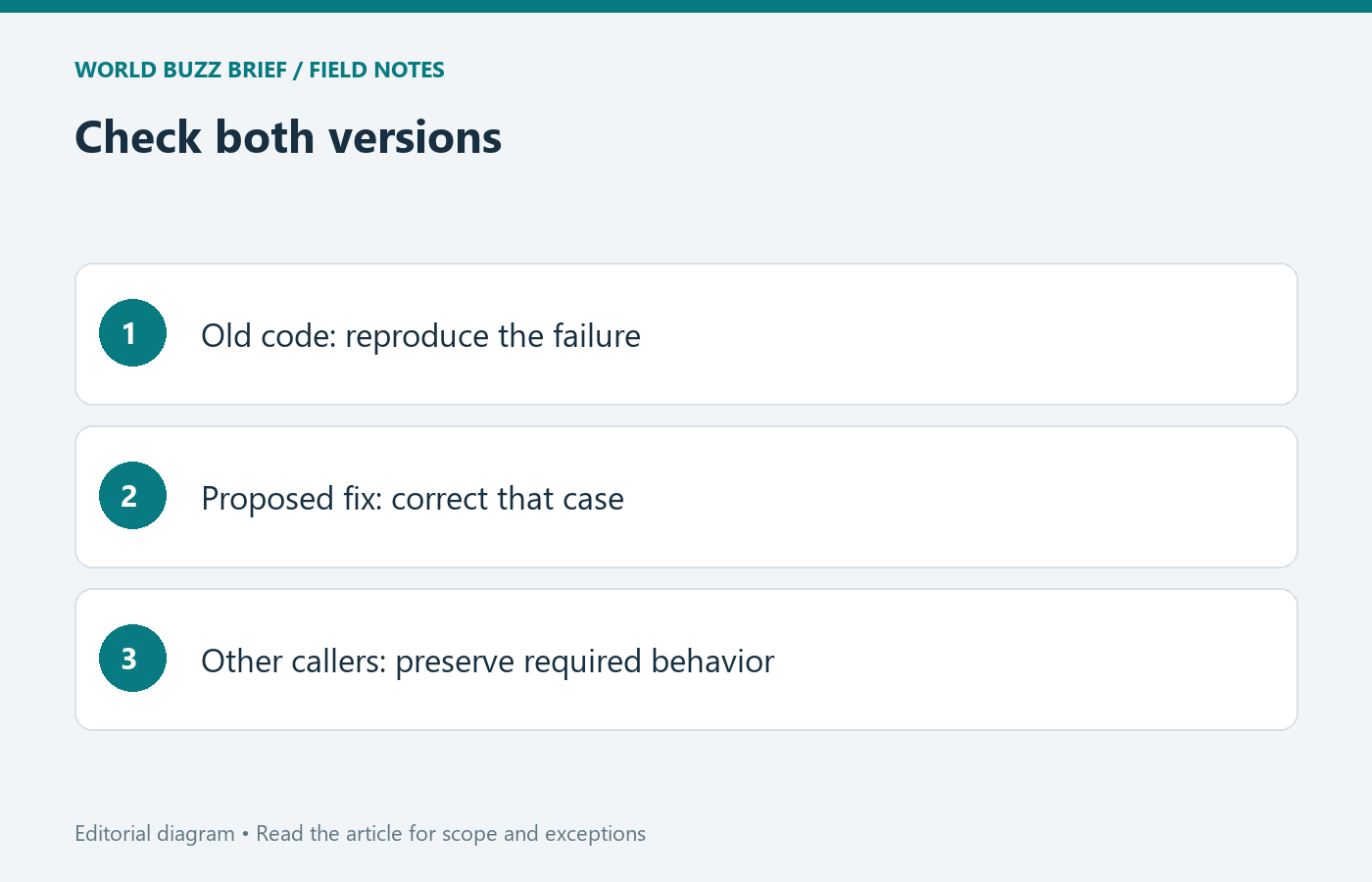
Construct a minimal input that reaches the disputed branch. Record the result before changing the code. Where possible, make a regression check fail for the claimed reason on the old version and pass after the correction. A test that only confirms the new implementation’s shape may say little about the original problem.
Keep the test environment separate from production data and credentials. If reproducing the issue would send messages, charge a customer, or alter a real account, use an appropriate fake or isolated test environment. The purpose is to understand the behavior, not to demonstrate the warning by causing its worst consequence.
Review the proposed fix as a new change
A valid finding does not make the suggested patch automatically correct. Check whether it changes error handling, permissions, ordering, or data interpretation outside the reported case. Compare the new behavior with the requirement and with callers that depended on the previous contract.
Suppose a proposed fix catches every exception and returns an empty result. It may make the example stop crashing while hiding a connection failure that callers need to distinguish from ‘no data.’ Test those outcomes separately. This hypothetical example illustrates why passing one regression check is necessary evidence, not a complete review of the patch.
Keep reasons for accepted and rejected findings
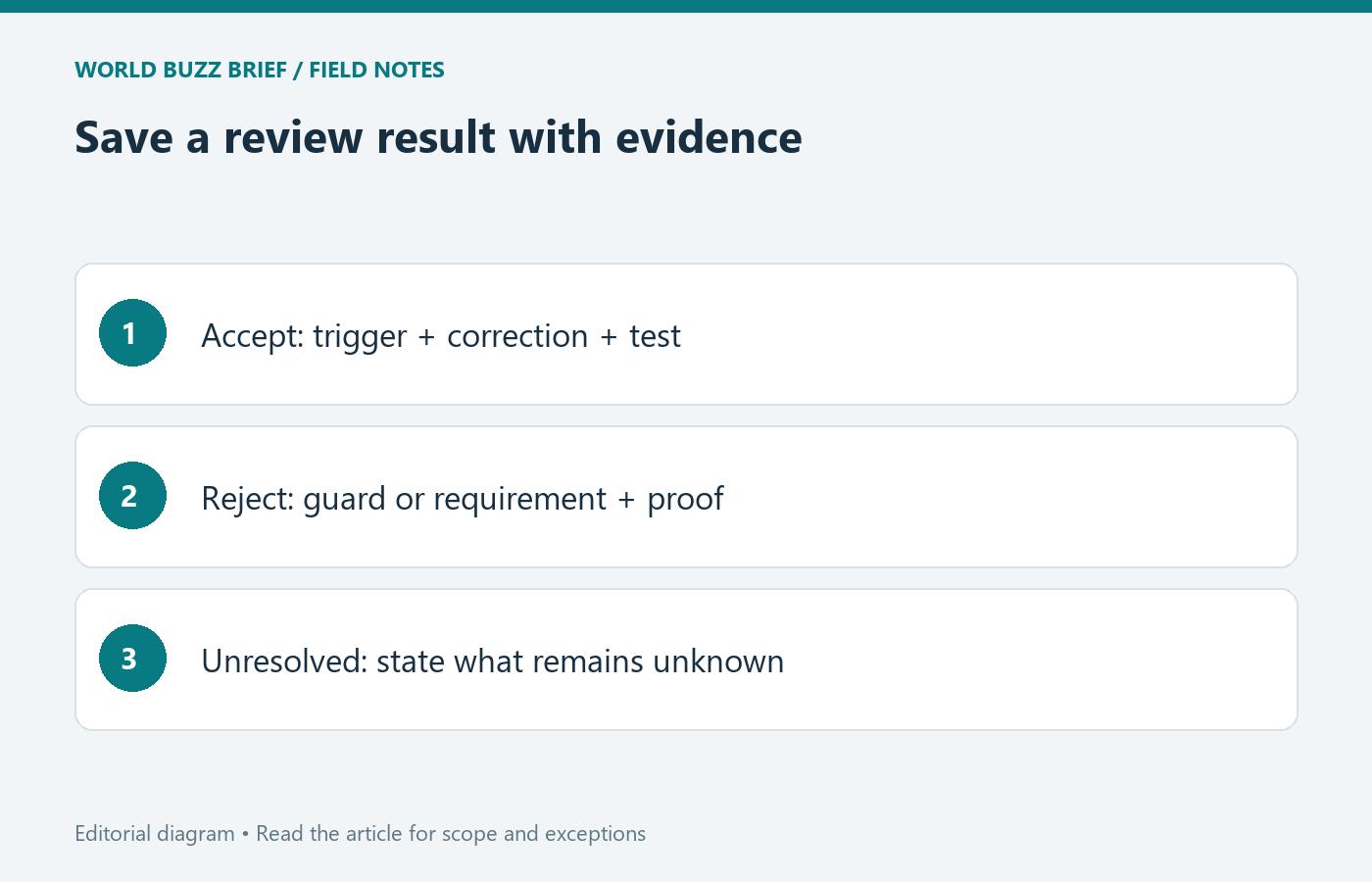
For an accepted finding, save the trigger, the failed expectation, the correction, and the checks performed. For a rejected one, save the relevant guard or requirement and the evidence showing why the warning does not apply. A short reason is more reusable than a thumbs-up or a dismissal with no explanation.
GitHub’s responsible-use guidance discusses limits in understanding intent and context. Supply the missing requirement where it improves the review, but do not confuse more context with guaranteed correctness. The target is a smaller set of well-supported changes and a record that another reviewer can understand without replaying the entire AI conversation.