A linked answer can feel finished before anyone opens the link. The useful check is smaller: choose the sentence that will affect your decision and find the passage that supports it. A related webpage and evidence for a particular claim are different things.
Pick the claim that would change your next action
Suppose an AI answer says a museum is free on Sunday and closes at six. Those are two claims. If you are planning a visit, the important evidence is the museum's current admission and opening information, not a general tourism page describing the collection. Write each operational claim separately before checking it.
This keeps the task manageable. You do not need to investigate every harmless adjective with equal effort. Start with dates, prices, eligibility, instructions and named entities. A claim that would make you buy, travel, install or submit something deserves a clearer check than a broad description such as 'popular with visitors.'
Open the link and match the actual passage
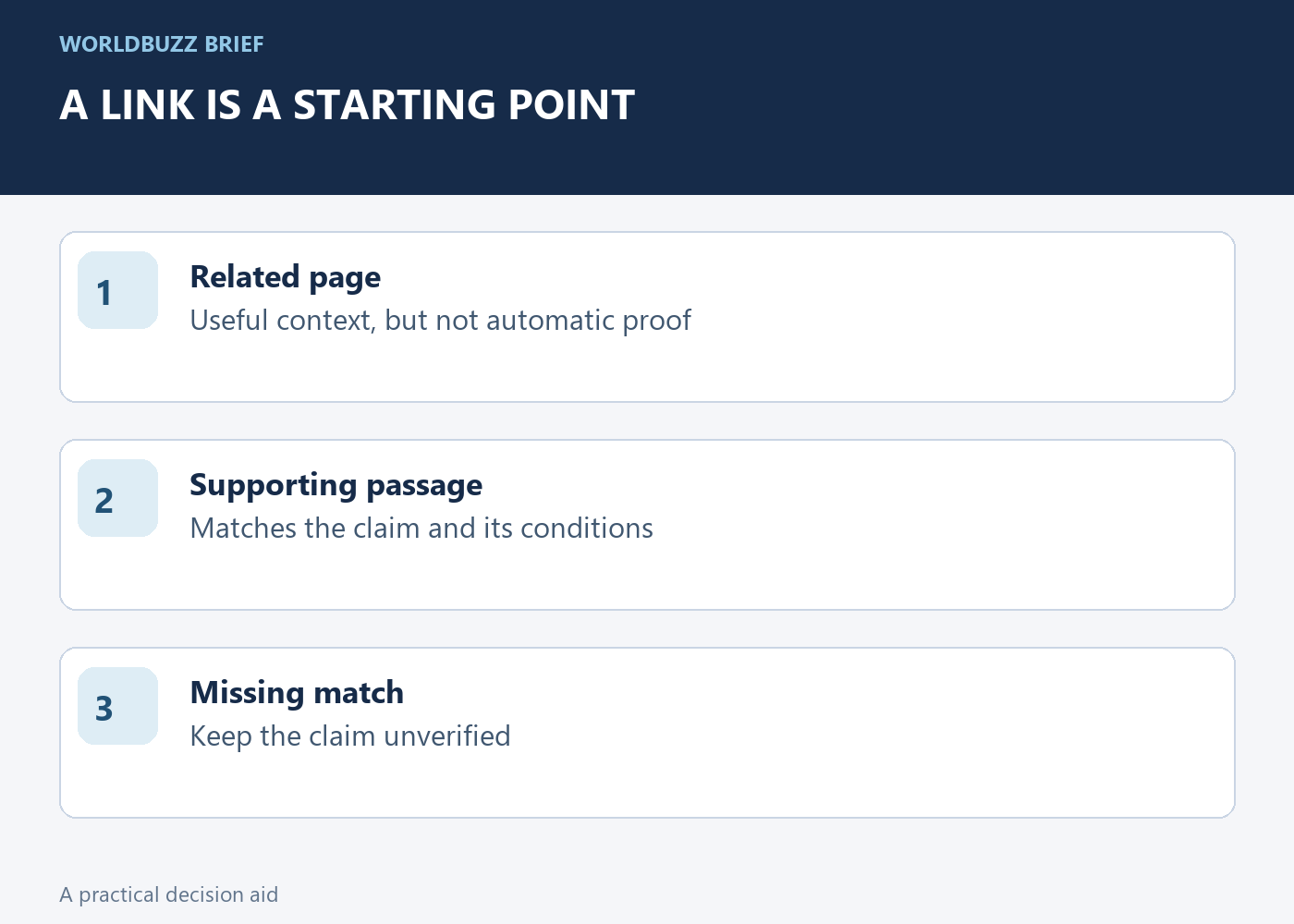
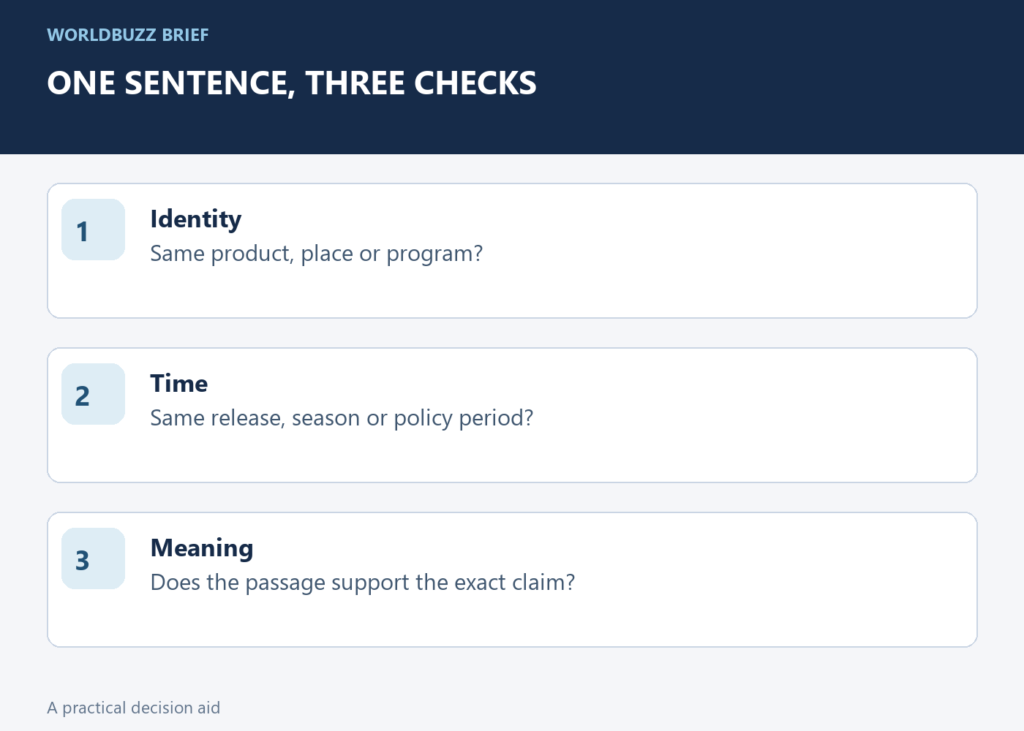
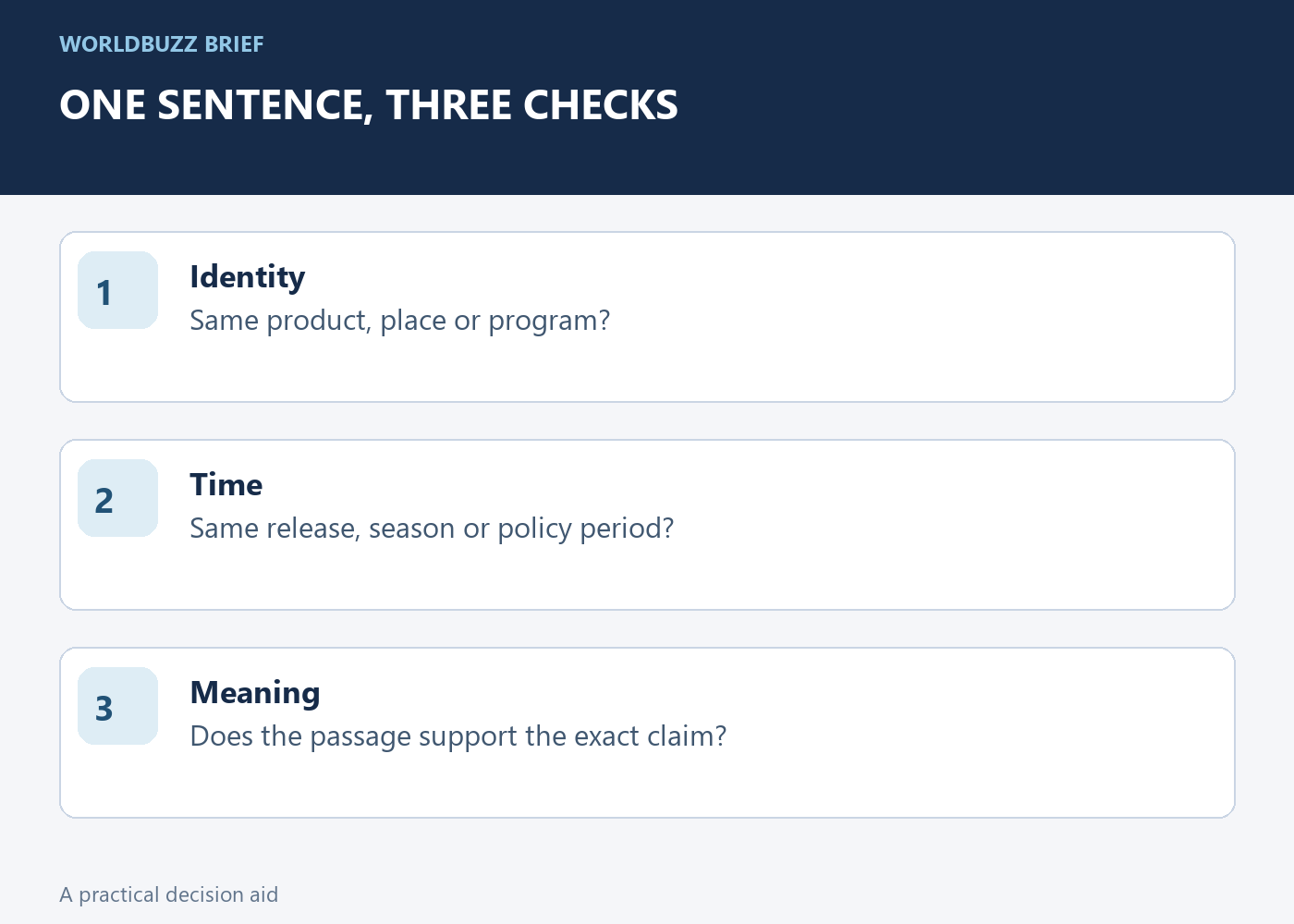
Google describes Gemini's source links as sources and related content; not every response includes them. Open the supplied page and look for the relevant passage. Ask whether it names the same product, place or program, covers the same period and supports the particular conclusion in the answer.
For example, a 2023 announcement that a trial was free does not establish that access is free today. A paragraph about one membership tier does not establish a benefit for every account. Keep the passage beside the sentence you plan to use. If you cannot point to the match, label the claim unverified rather than filling the gap with the model's confident phrasing.
Look for conditions the summary left behind
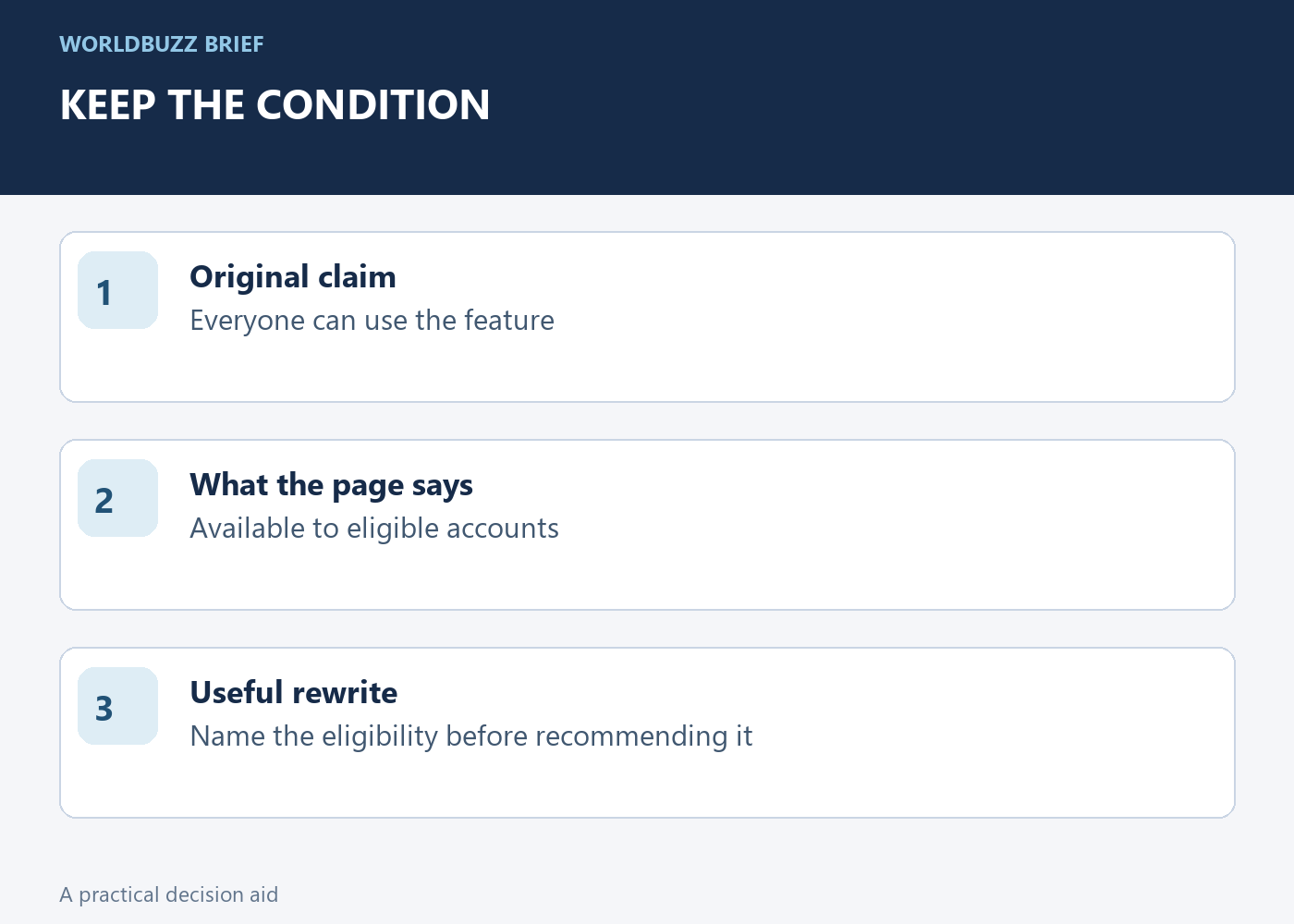
A source can support a statement only after a qualification is restored. Look for words such as 'selected,' 'up to,' 'eligible' and 'subject to availability.' Also inspect the heading above the passage: it may restrict the advice to Android, business accounts or a particular country even when the quoted line looks universal.
Use a simple rewrite test. Can you express the useful claim in one sentence with its condition intact? 'Eligible accounts can use this option' is less sweeping than 'everyone can use it,' but it helps the right reader act. If the condition makes the original recommendation unsuitable, change the recommendation instead of hiding the qualification in a footnote.
Keep a short evidence note and a clear stopping point
For something you will share or rely on, save the claim, the supporting page and the date checked. You can retain this privately without turning a short message into a bibliography. The visible explanation should contain the useful conclusion and any condition the reader needs to know.
If the supplied link does not answer the question, go directly to the responsible organization's current documentation. Asking the model to repeat its confidence is not another independent check. Stop when the decisive claim is supported, corrected or explicitly unresolved. That outcome is more useful than collecting ten loosely related links beneath an answer whose key sentence remains unverified.