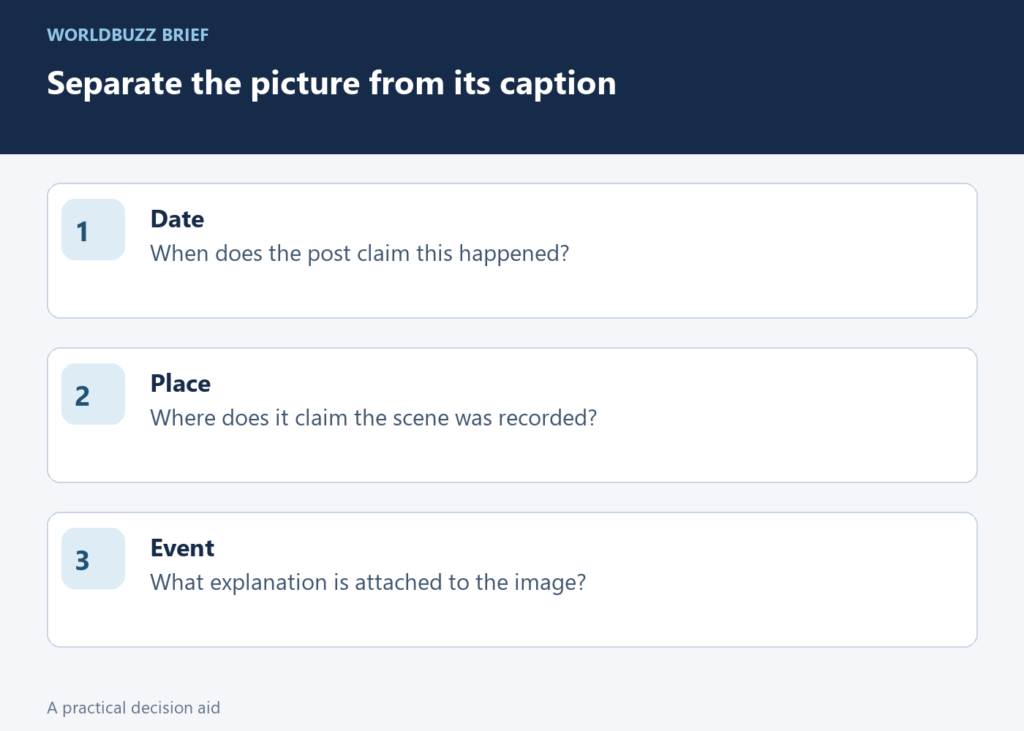
The first question about a striking image is not always whether AI generated it. A genuine photograph from another year or place can support a misleading caption just as effectively. Before sharing, separate the picture from the claim attached to it and investigate the date, location and event independently.
Turn the caption into three checkable claims
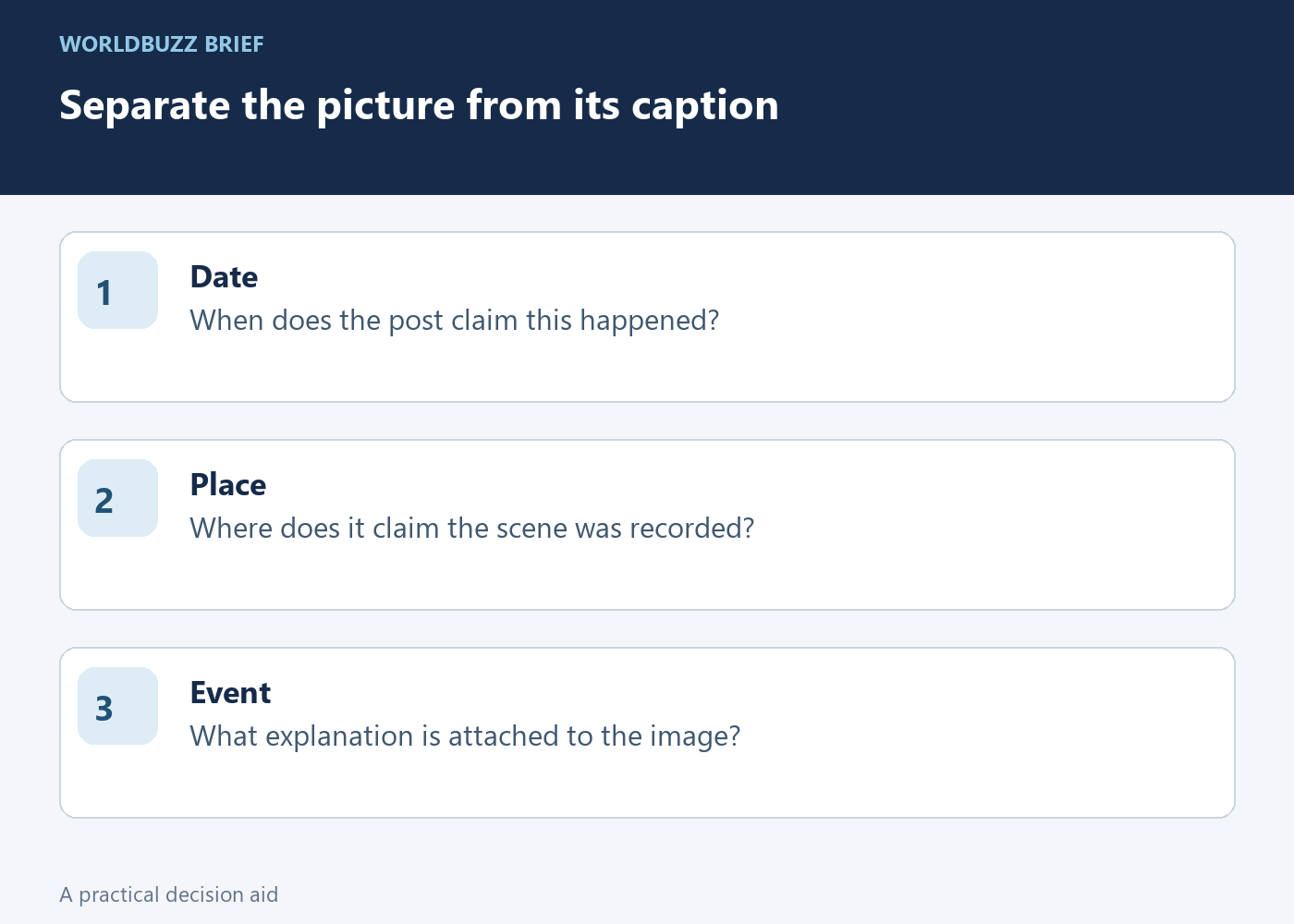
Copy the claimed date, place and event into a note. If the caption says “today’s flooding in this city,” those are three assertions, not one. Keep the image as it appeared with the caption so you can compare the exact crop and context later. Do not begin by searching only the emotional wording of the post.
Look for visible details that could help identify the scene: signs, building shapes or a distinctive arrangement of objects. Treat them as leads, not instant proof. A familiar-looking skyline can be misleading, and text visible in an image may have been altered. The purpose is to form a testable search, not to guess a location confidently.
Use earlier appearances to test the timeline
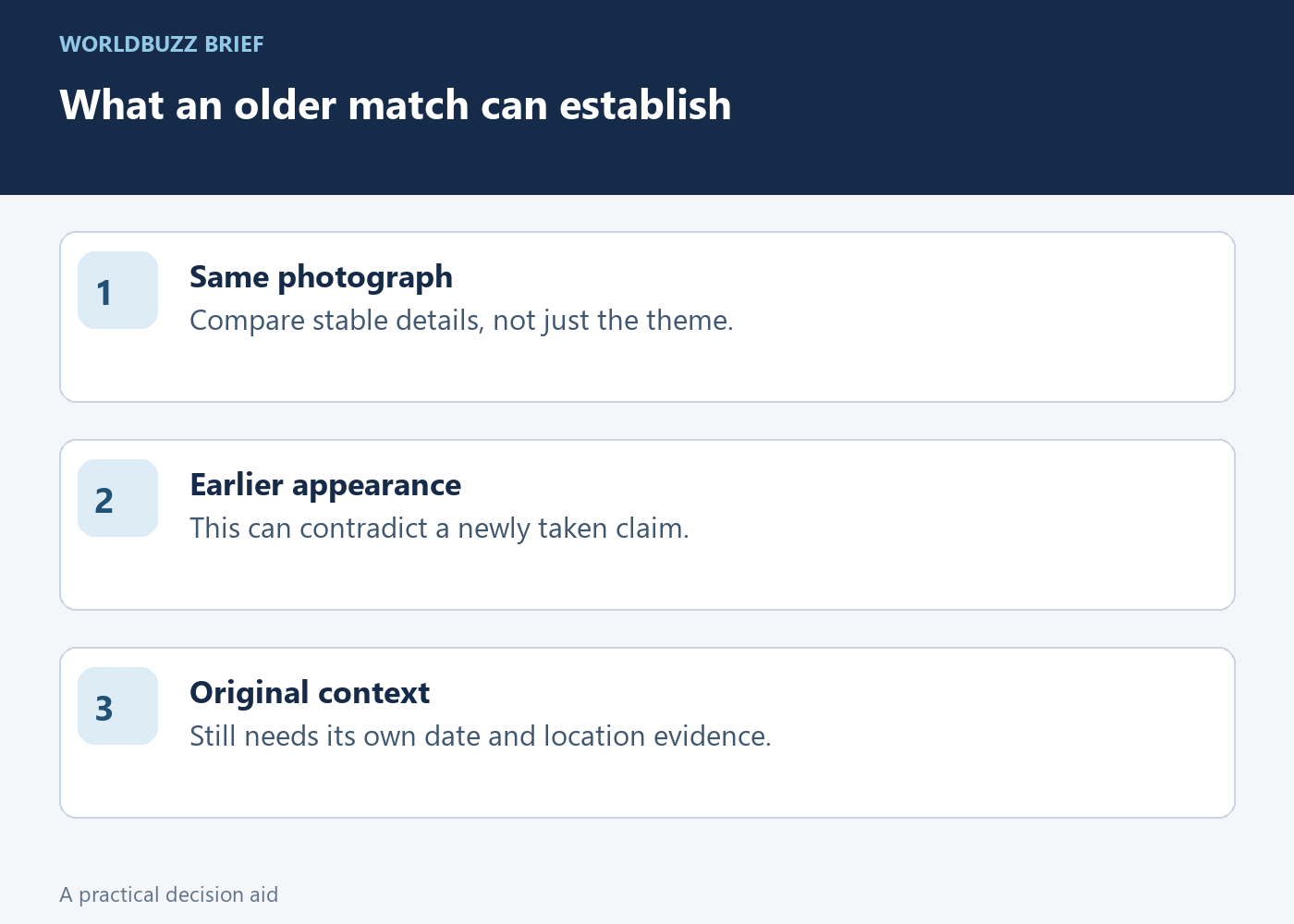
Google’s About this image can provide context such as when an image or similar images may first have appeared in Search and how other sites use it. Open the actual pages it points to. A search result is a lead; the surrounding article, caption and publication information are what you need to examine.
In a hypothetical case, an image captioned as this morning’s storm also appears in an article from two years earlier. If you establish that it is the same photograph, that earlier appearance contradicts the claim that the picture was newly taken today. It does not by itself prove where the photograph was originally made or who owns it.
Compare the crop before treating a match as proof
Find stable features shared by the two versions: the same arrangement of windows, a person’s position or a distinctive object. A similar scene is not necessarily the same exposure. Cropping, mirroring or added text can make a genuine match harder to see, so inspect the picture rather than relying only on the result’s thumbnail.
Then read the earlier caption in context. It may describe a different event, or the page may itself be repeating an unverified claim. Prefer a traceable original publication or credited source when available. Keep separate notes for “same image found earlier” and “original date and location established,” because the first result is often easier to prove than the second.
State the narrow conclusion you actually reached
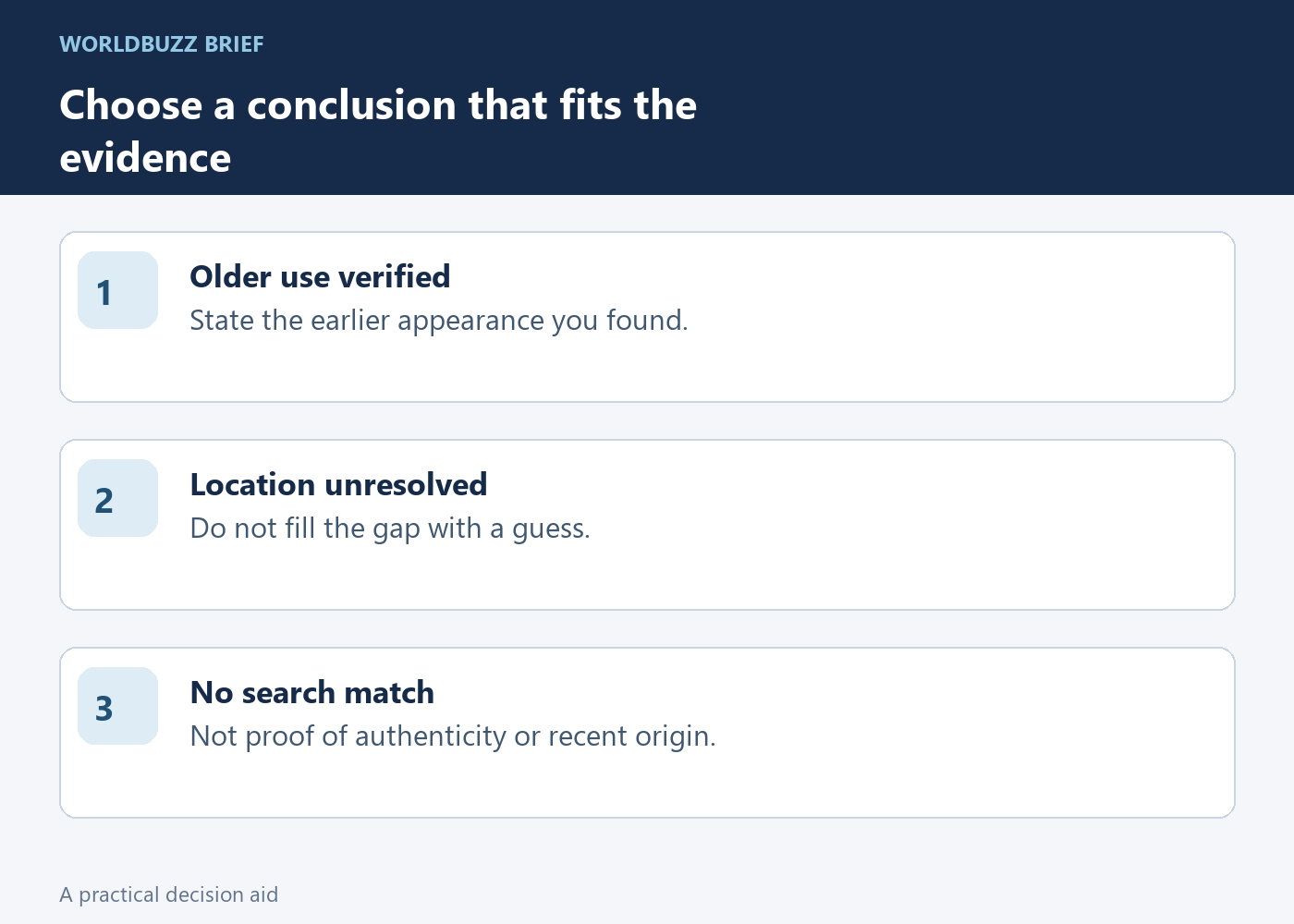
If you verified an older appearance but not the original location, say that. “This photograph appeared before the claimed event” is a stronger, more defensible correction than inventing the missing location. Conversely, finding no match is not proof that the image is new, authentic or unaltered; search coverage is incomplete.
Before sharing, ask whether the remaining uncertainty changes the reason you wanted to pass the image along. If the caption’s main claim has failed, forwarding it with a vague question mark can still spread the same impression. Share the checked context or leave the image out. Authentic pixels and an accurate story are two different things to establish.