A frightened voice sounds like someone you love. The caller wants help immediately and asks you not to involve anyone else. The important question is not whether you can identify an artificial voice by ear. It is how to verify the emergency without relying on the same person who is demanding the payment.
The FTC has warned that voice-cloning software can imitate a loved one from an audio sample. That warning does not mean every unusual call is synthetic, or that a familiar-sounding call is genuine. Both assumptions skip the identity check you actually need.
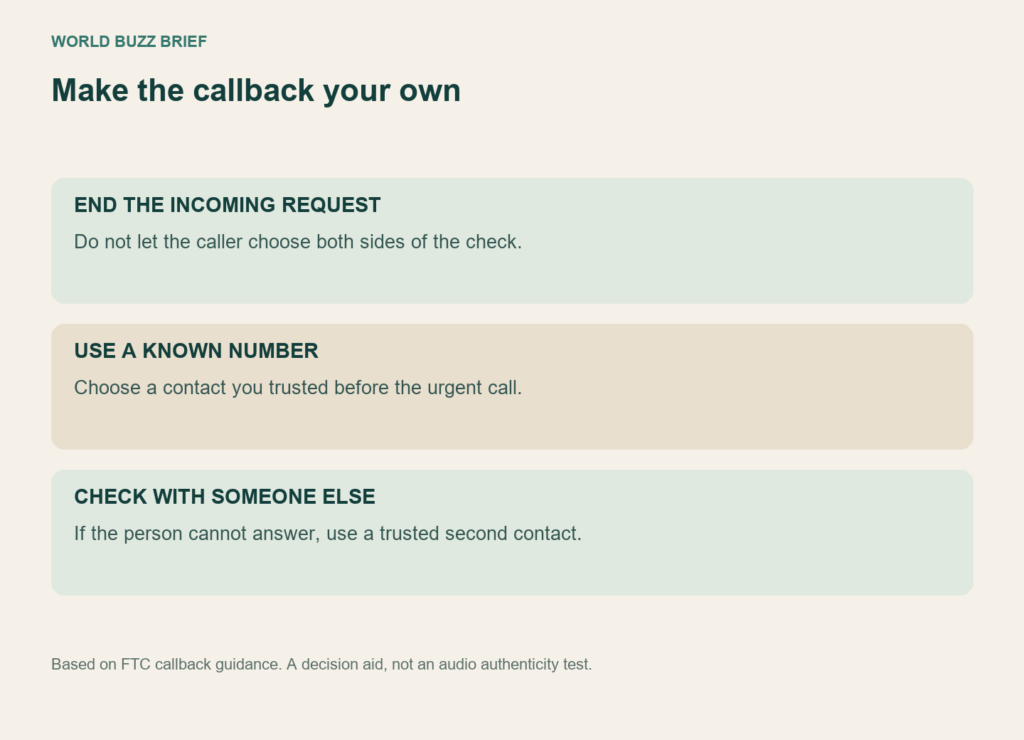
End the incoming conversation and make your own connection
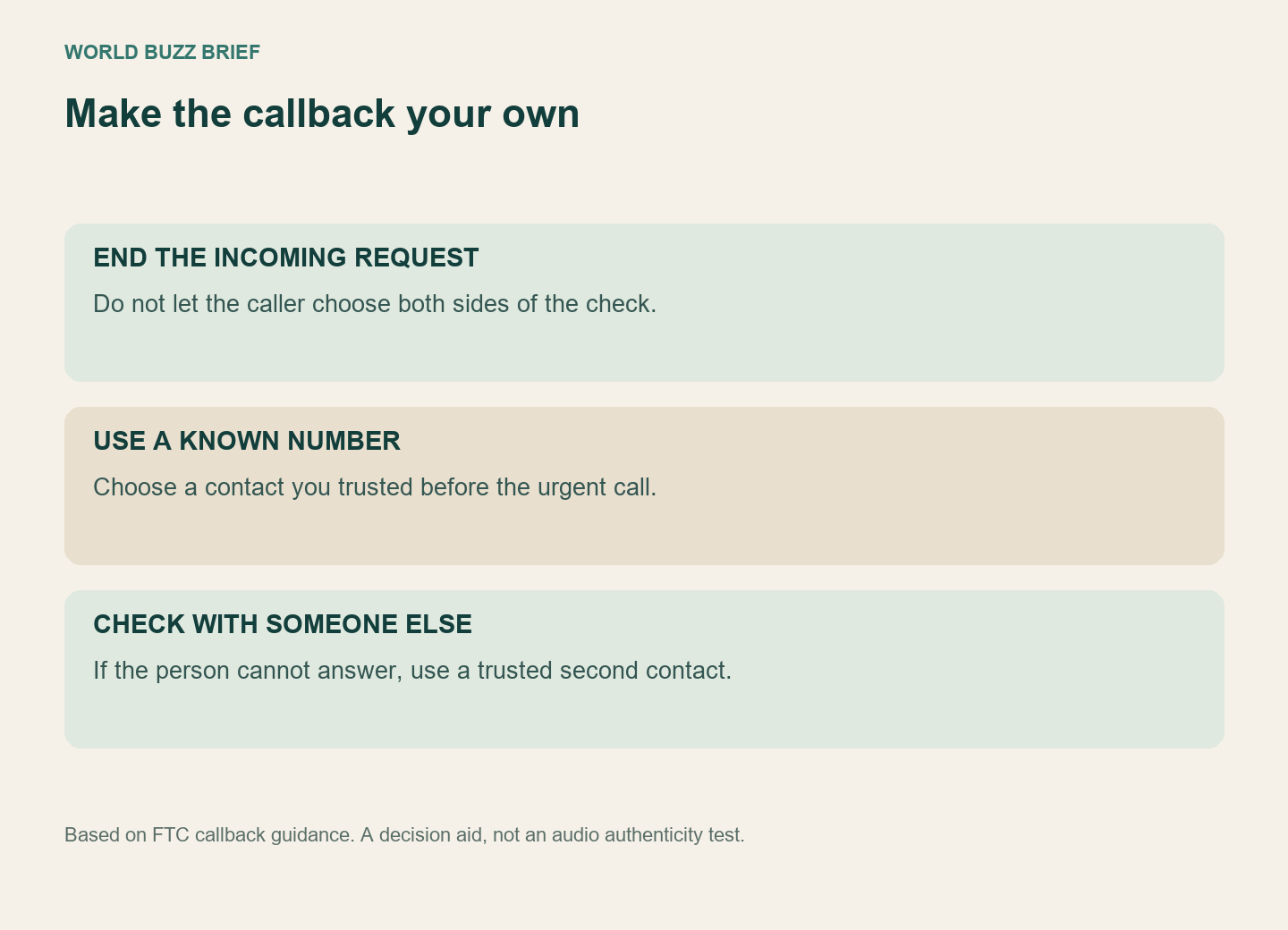
Use a number you already know belongs to the person. If they do not answer, contact a trusted relative or friend who can help establish what is happening. This is the FTC’s central advice: verify through your own contact route, rather than trusting the voice.
A useful sentence to prepare is: “I want to help. I am going to contact you through our usual number.” You do not have to win an argument about audio quality before doing that. Asking the original caller to provide a second number leaves them in charge of both sides of the supposed check.
For example, imagine a caller supplies a number for a “colleague” who confirms the story. That is not independent confirmation merely because a different voice answers. This is an illustrative scenario, not a reported incident. The point is to choose the contact yourself, using information you trusted before the urgent request arrived.
Separate the claimed emergency from the demanded action
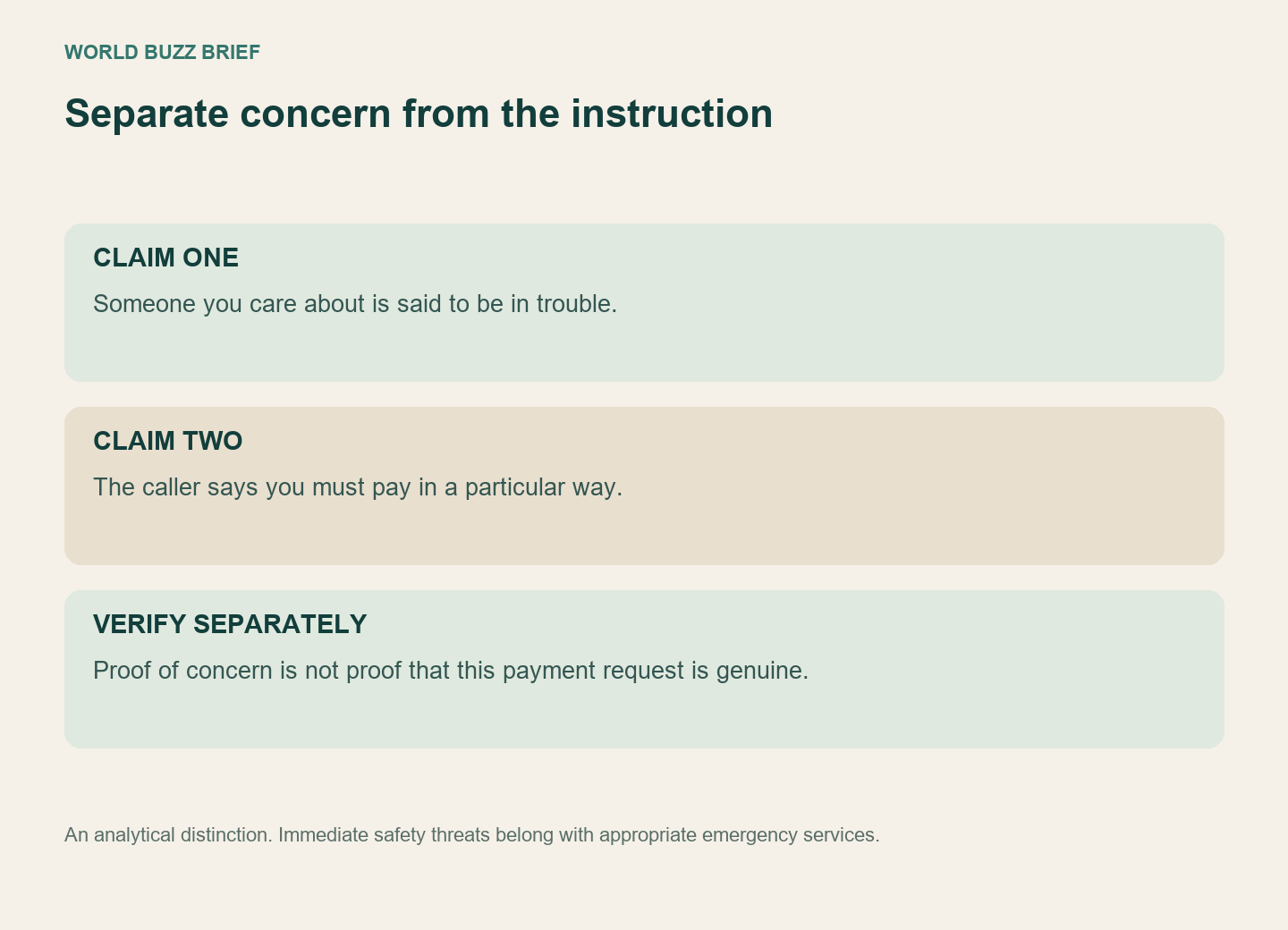
The FTC’s family-emergency guidance describes pressure to keep the situation secret, claims that only you can help, and payment demands through methods such as gift cards, cryptocurrency or money transfers. A caller may also introduce a supposed lawyer, police officer or other authority figure.
Write down the two claims separately: what supposedly happened, and what you are being asked to do. “My relative needs help” and “I must send this caller a gift-card code” are different propositions. Evidence for one would not automatically establish the other. If there is a credible immediate threat to safety, use the appropriate local emergency service through an independently obtained contact route.
Make the plan before anyone is frightened
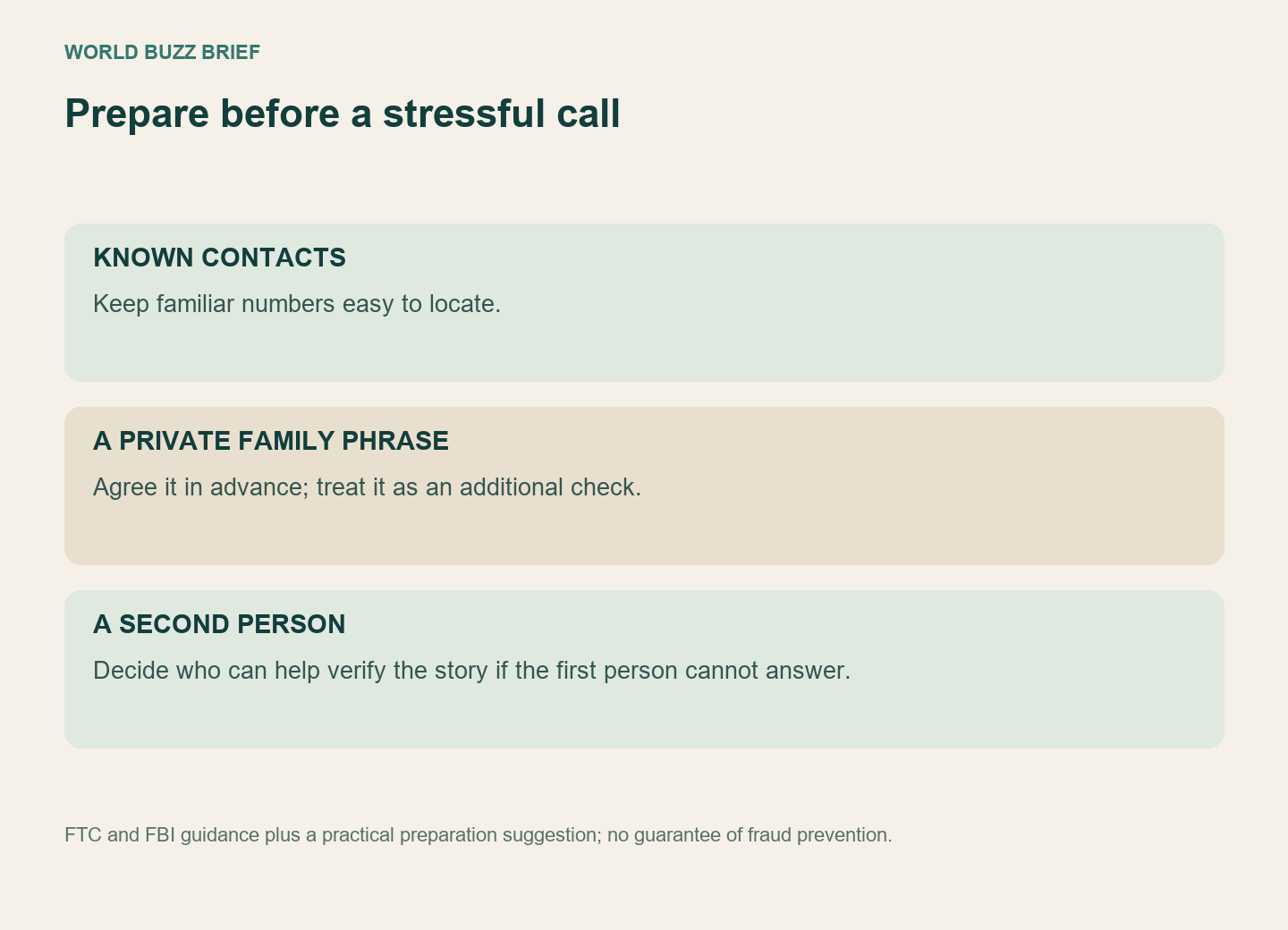
The FBI’s December 2024 warning about generative-AI fraud recommends agreeing a private word or phrase with family. It also recommends independently contacting an organization that supposedly called you. Treat the family phrase as an additional check, not a reason to ignore a suspicious request if the phrase is somehow known.
Our practical suggestion is to agree who the second contact will be if the first person cannot answer. Save those details where the person receiving a call can find them easily. Practice locating the contact once, without creating a fake emergency or frightening anyone. The aim is a repeatable action, not a test of who is most skeptical.
If money has already been sent, contact the payment provider promptly and explain what happened; recovery is not guaranteed. In the United States, the FTC directs people to ReportFraud, and the FBI accepts internet-crime reports through IC3. Elsewhere, use the relevant local reporting route. Preserve the messages and transaction details rather than continuing a negotiation with the caller.